
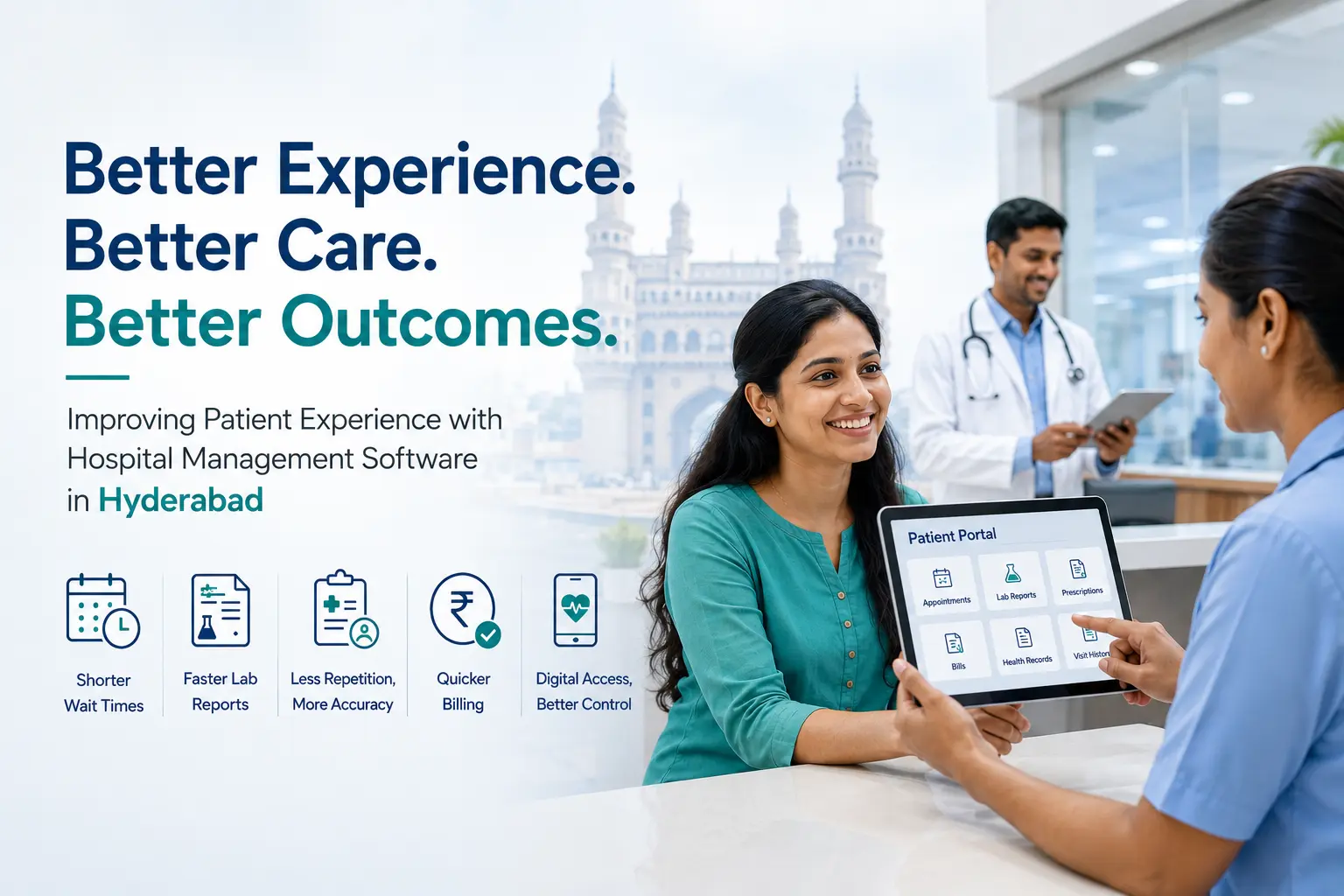
Improving Patient Experience with Hospital Management Software in Hyderabad
Patients consider a lot more than just clinical outcomes when evaluating a hospital. Do they have to repeat their medical history multiple times? Do they get lab results in a timely manner? How confusing is the final bill? Do they have efficient customer service? Do their friends or family recommend this hospital? What is the general reputation? Is the hospital convenient to get to? What are the hospital's opening hours?
All these different aspects determine if a patient is going to recommend the hospital to other people or if they are going to go back. Most of the positive experience improvements to patients in Hyderabad has been thanks to the hospital management system they have implemented.
More Accurate Out-Patient Department (OPD) Wait Times
Patients have noticed the improvements adding a patient management system has made to their OPD wait times first. Management software has made it much easier for patients to book their appointments digitally. This has meant that patients guide their arrival times much more accurately. The software has been made much more user-friendly by digitally displaying patients' position in line and the estimated wait time.
Making the process more transparent has made waiting more manageable for patients, even if you still have to wait.
Faster Lab and Diagnostic Reports
Integrating lab and radiology systems into the core HMS allows for rapid printing of results as soon as they are finalized. Results are delivered to the patient's digital medical record. Traditional systems require lab results to be printed and delivered to medical records in a manual step. With integrated systems, results can be printed in as little as a few minutes, and patients can view them in the digital portal. Patients often do not have to return to the hospital or call to check the status of their results.
Less Repetition and Paperwork
Not just in Hyderabad but across India, one of the most annoying and common complaints heard is the constant repetition of the same information throughout the various departments/units the patient visits for their stay in the hospital. Integrated systems capture the patient's medical history, allergies, and current medications only once, typically during the registration process, and thereafter make this information accessible to all relevant departments, including the consulting doctor, the lab, the pharmacy and even specialist referrals during the same visit.
This system reduces frustration and risk pertaining to the omission of important information, such as a drug allergy, due to variations in manual records.
Quicker Billing at Discharge
Billing at discharge often leaves a bad impression on the patient. One reason for this is confusing and frustrating billing due to delays, and this is one of the most common complaints inpatient customers have about a hospital. Consolidation of charges for pharmacy, labs, rooms, and consultations into a single bill, done automatically by the system, reconciles the charges faster.
Leaving the hospital will be easier for the patient by offering an automatic system to consolidate charges. Instead of staff having to gather all of the charges that were incurred across all of the departments, discharge billing offers a final bill to be reconciled.
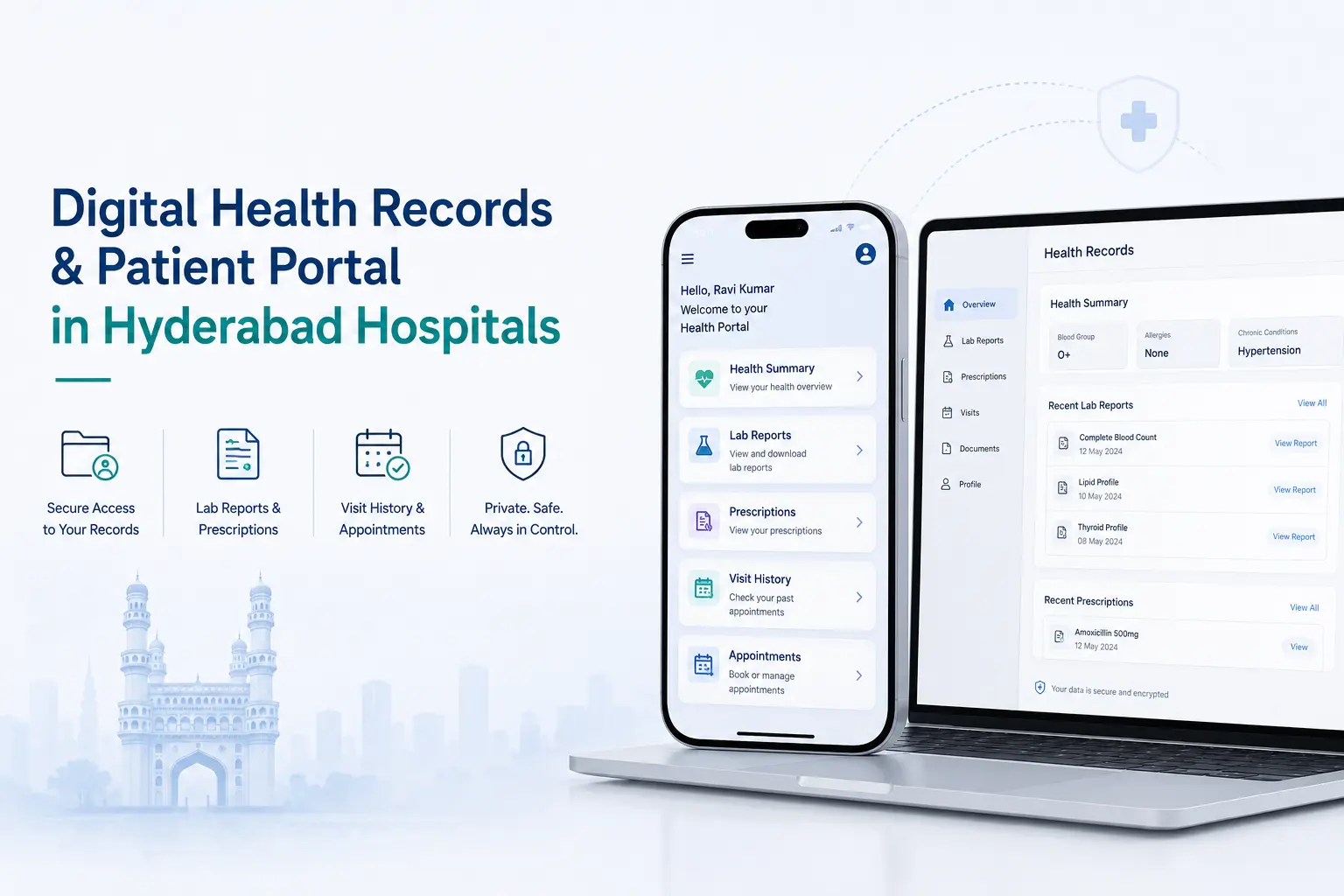
Access to Digital Health Records and Patient Portals
It is becoming common practice for hospitals in Hyderabad to offer direct digital access to patients' prescriptions and lab results, along with their visit histories. This practice will continue to grow, especially with younger and more technologically proficient patients.
One of the other substantial advantages for a patient is the accessibility of medical records. This phenomenon increases the convenience of a digital health record system. A patient can easily continue their care and switch to an outside network of providers or request a second opinion, with the digital system having eliminated the long delay that previously occurred with hospital staff retrieving the paper filing system.
Why It Matters for Hospitals' Reputation and Growth
In Hyderabad's competitive healthcare market, patient experience has a significant influence on referrals, repeat visits, and online ratings. This is the case even when considering the hospital's clinical reputation. When this software is employed, management systems integrated into the hospital ecosystem record higher patient satisfaction scores. This is typically not due to changes in clinical services provided by the hospital, but due to an improvement in the surrounding ecosystem, which is noticeably more respectful and less frustrating for the patient.
For hospitals that are competing to attract the same pool of patients, a more respectful and efficient experience is an operational differentiation framework.
What to Look for in Hospital Management Systems
When choosing a hospital management system for your hospital in Hyderabad, don't settle for the management systems that just have feature sets. Focus on the management systems that have optimized the management of hospital resources for each step in the patient experience.
Ask how the management system handles the connection of staff to patient appointments, how the system handles the recording of test results, and how the system manages billing and the discharge process. Journey-based questions drive a system's features and will have more impact on the patient experience than the feature sets of systems.
How Sparta HMS Was Built Around The Patient Journey
Sparta HMS considered the complete patient journey when building their product. Patients using Sparta HMS go through their booking, consulting, laboratory, and pharmacy steps. The patients then leave with a clear and concise bill.
This was designed from Sparta HMS's direct work experiences with various Hyderabad Hospitals, specifically catering to their operational needs and making patient care a main priority, as opposed to directly including patient care steps within standard operational administration software.
Experience Sparta HMS's end-to-end offerings in a live demo, from the patient's perspective. Contact us today